
What's Wrong With Singapore's Museums?
It should be obvious at this point that my wife and I are cultured folk. We enjoy art museums, both those in Tokyo and elsewhere. We especially enjoy modern and contemporary art, so on our recent trip to Singapore, we set aside a day to check out some of the country’s art museums.
Where we thought we were going

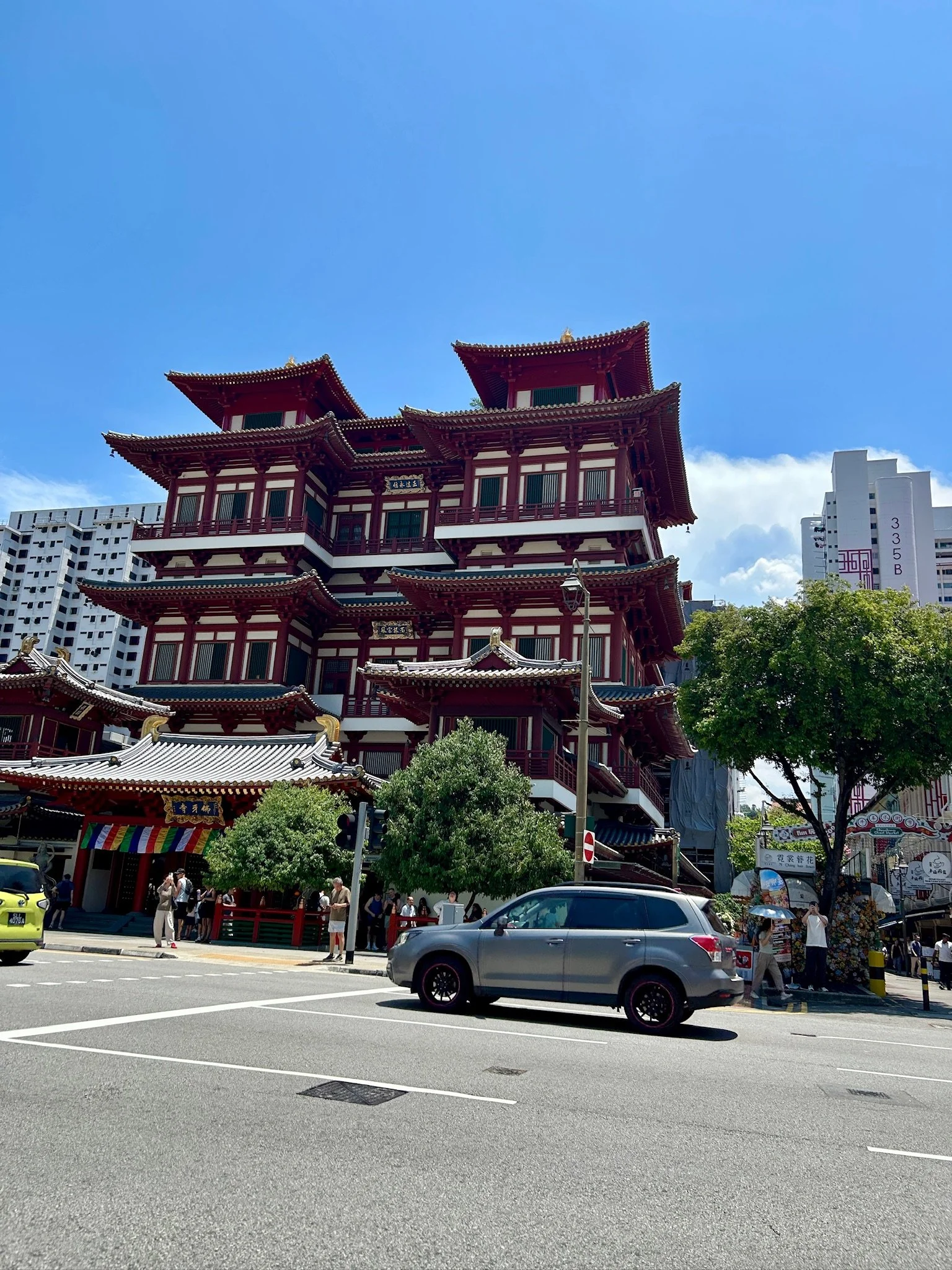
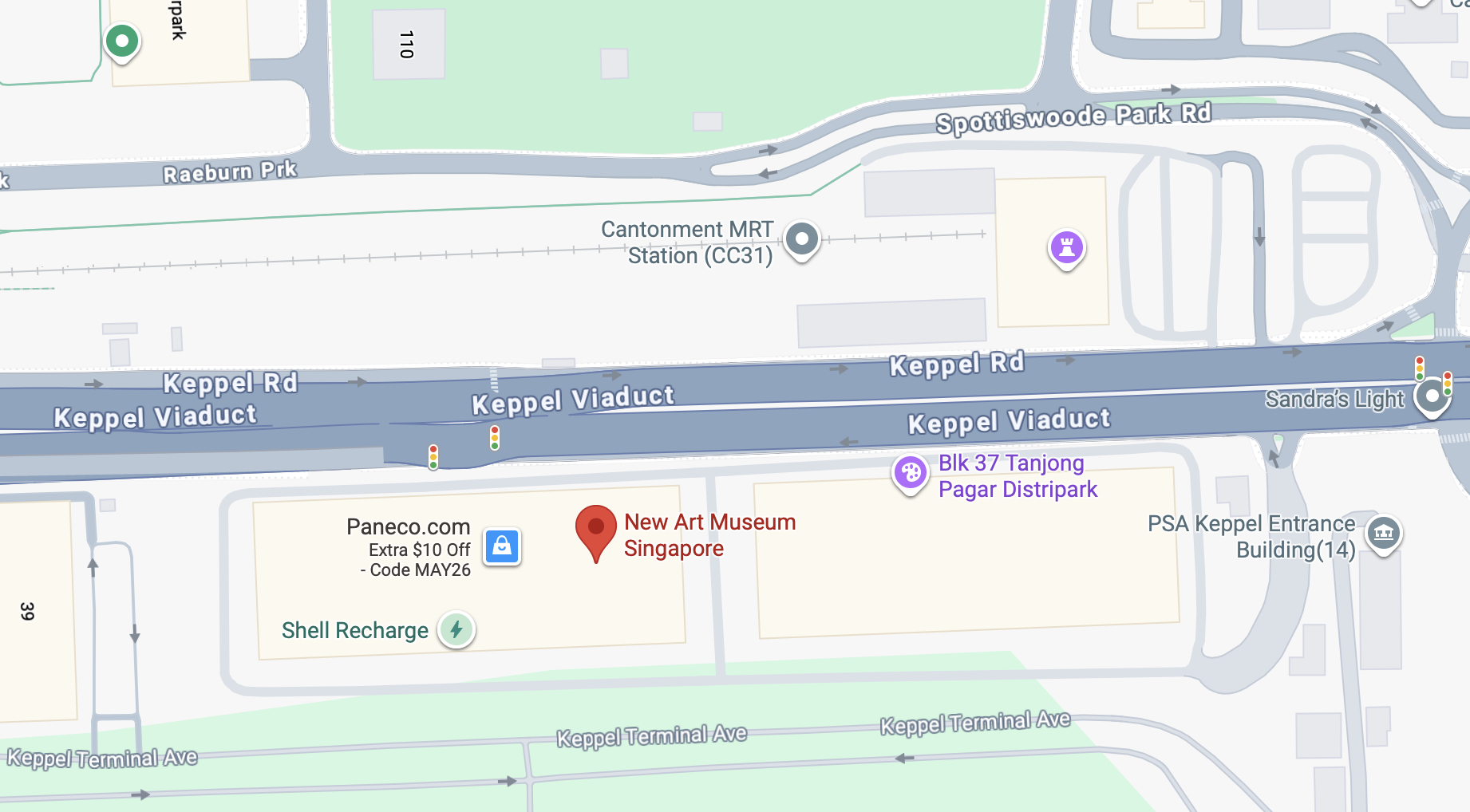

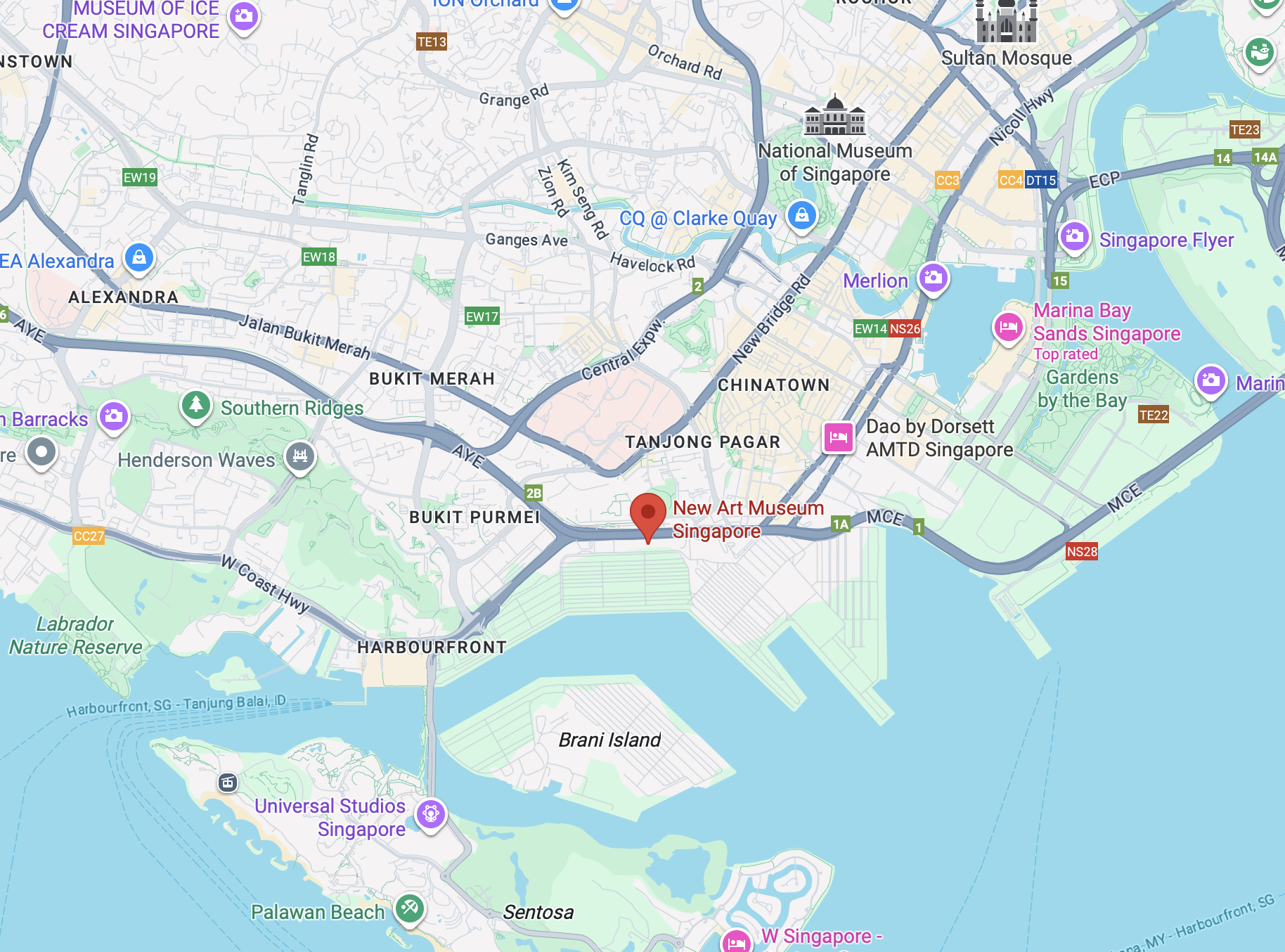
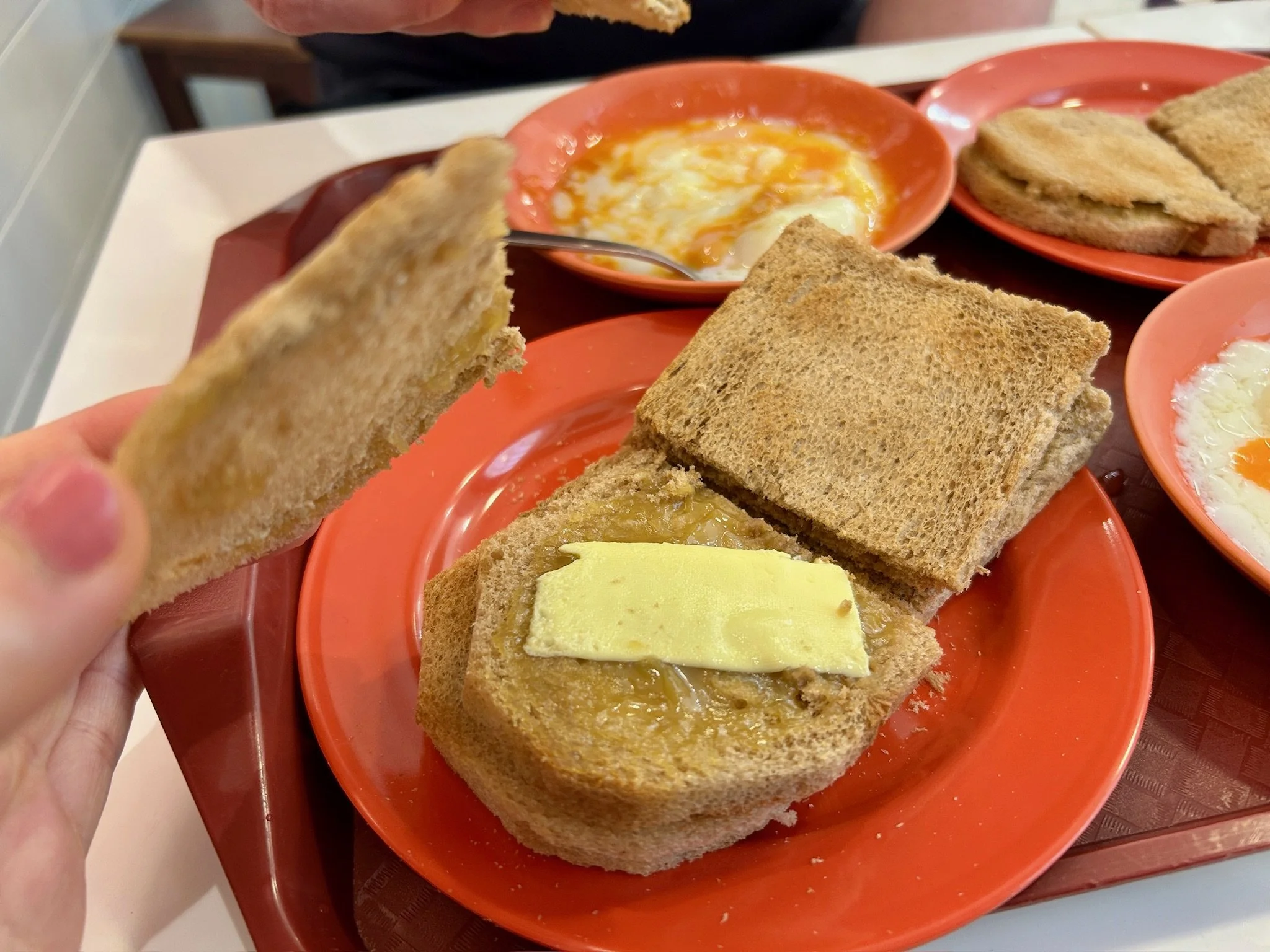
The three museums we planned on visiting were the New Art Museum, Museum of Contemporary Art, and Singapore Art Museum at Tanjong Nagar Distripark. They were all listed as being in the same area in the south part of town, so after a quick breakfast at Ya Kun Kaya Toast in Chinatown, we took a bus down to the location of the three dots on the map. What we saw was not what we expected.
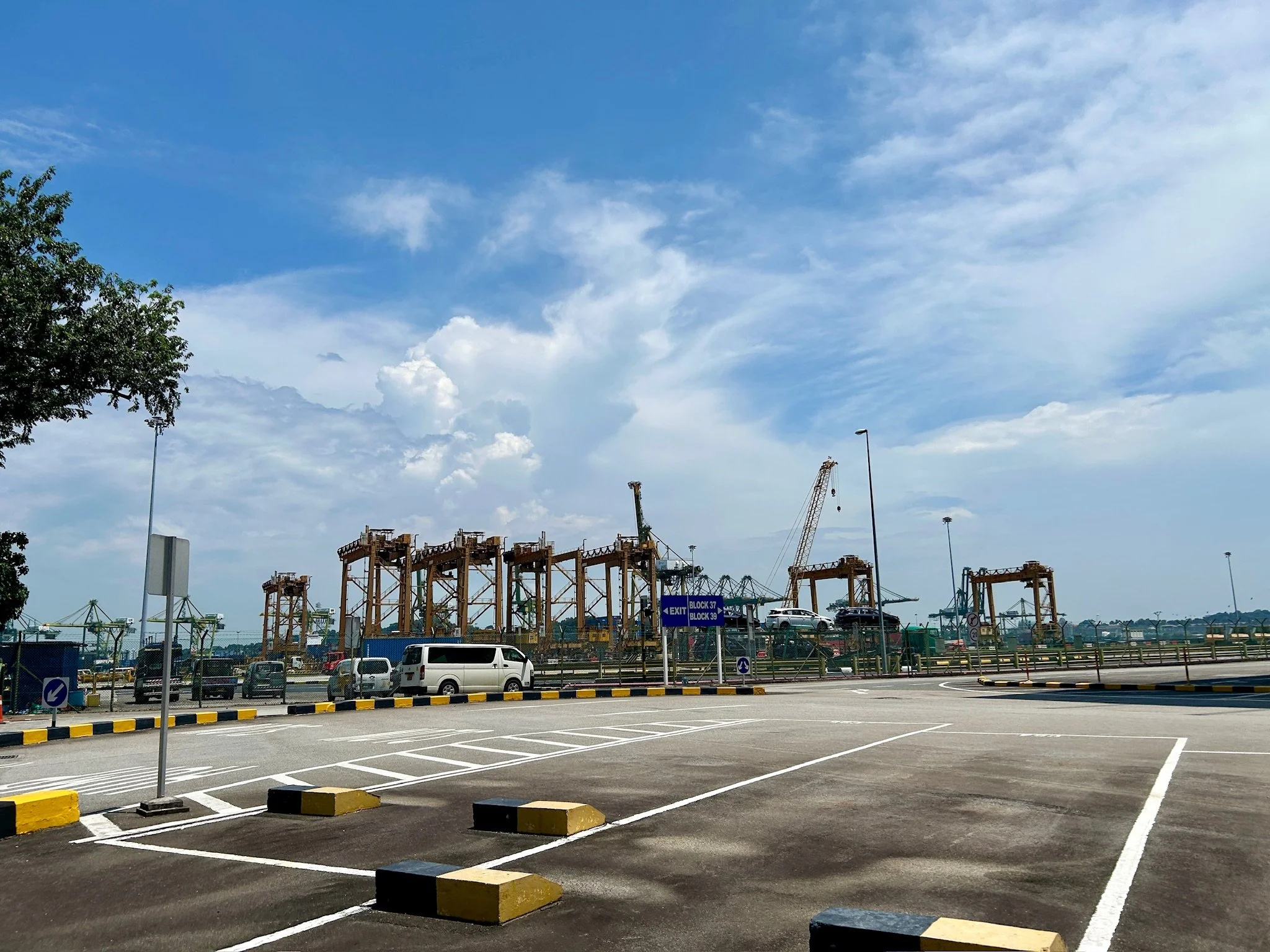
Great place to be in thousand-degree heat.
This is where the bus dropped us off. Some sort of industrial port. The museums were all located in a big warehouse structure that was possibly the most uninviting place I’d ever seen. It looked like a huge storage facility, with gruff workers milling about and crates being loaded or unloaded onto various trucks. We never found the New Art Museum, but we saw a sign for a place called SAM, so we walked in there.
Singapore Art Museum (SAM)
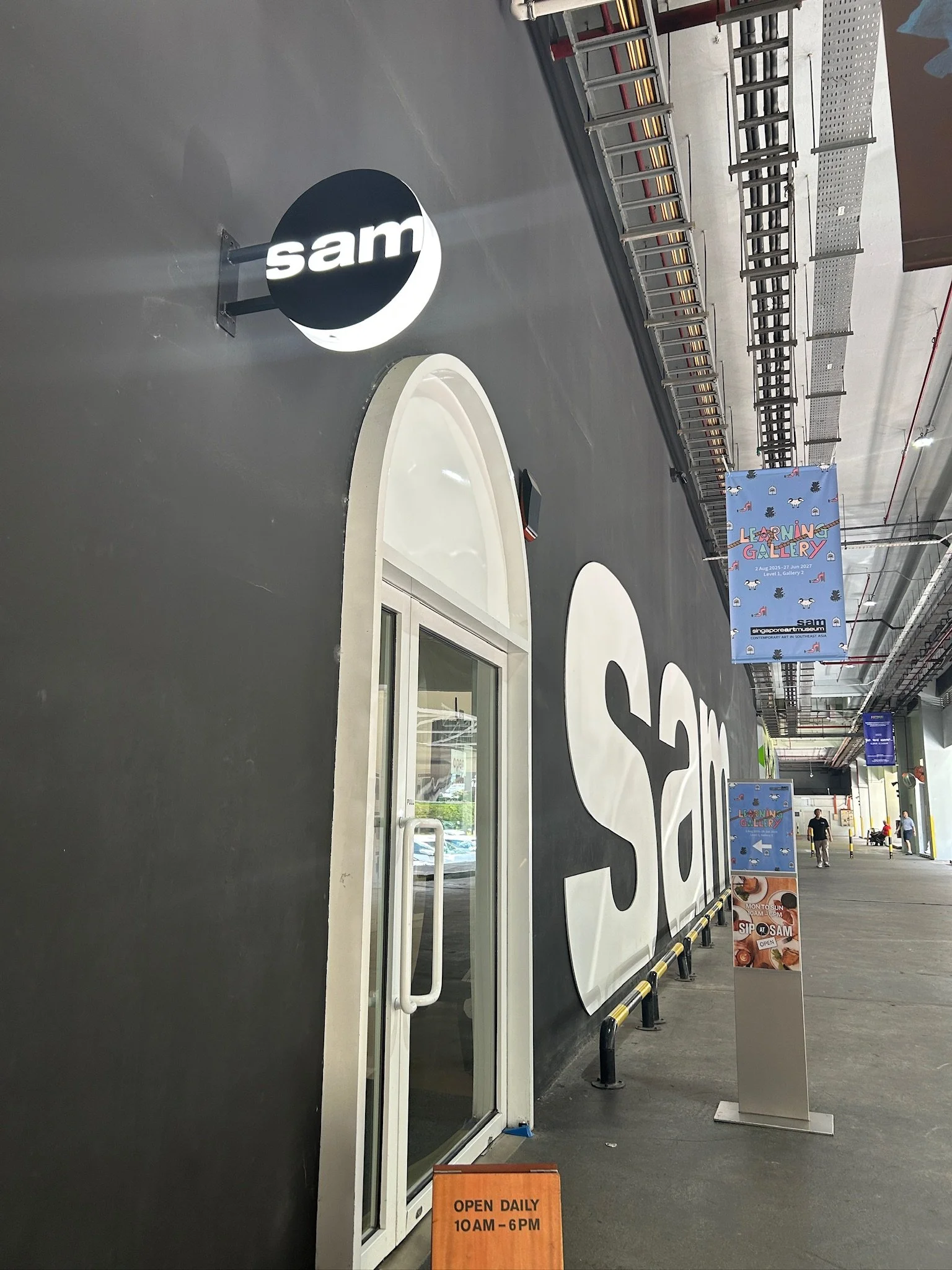
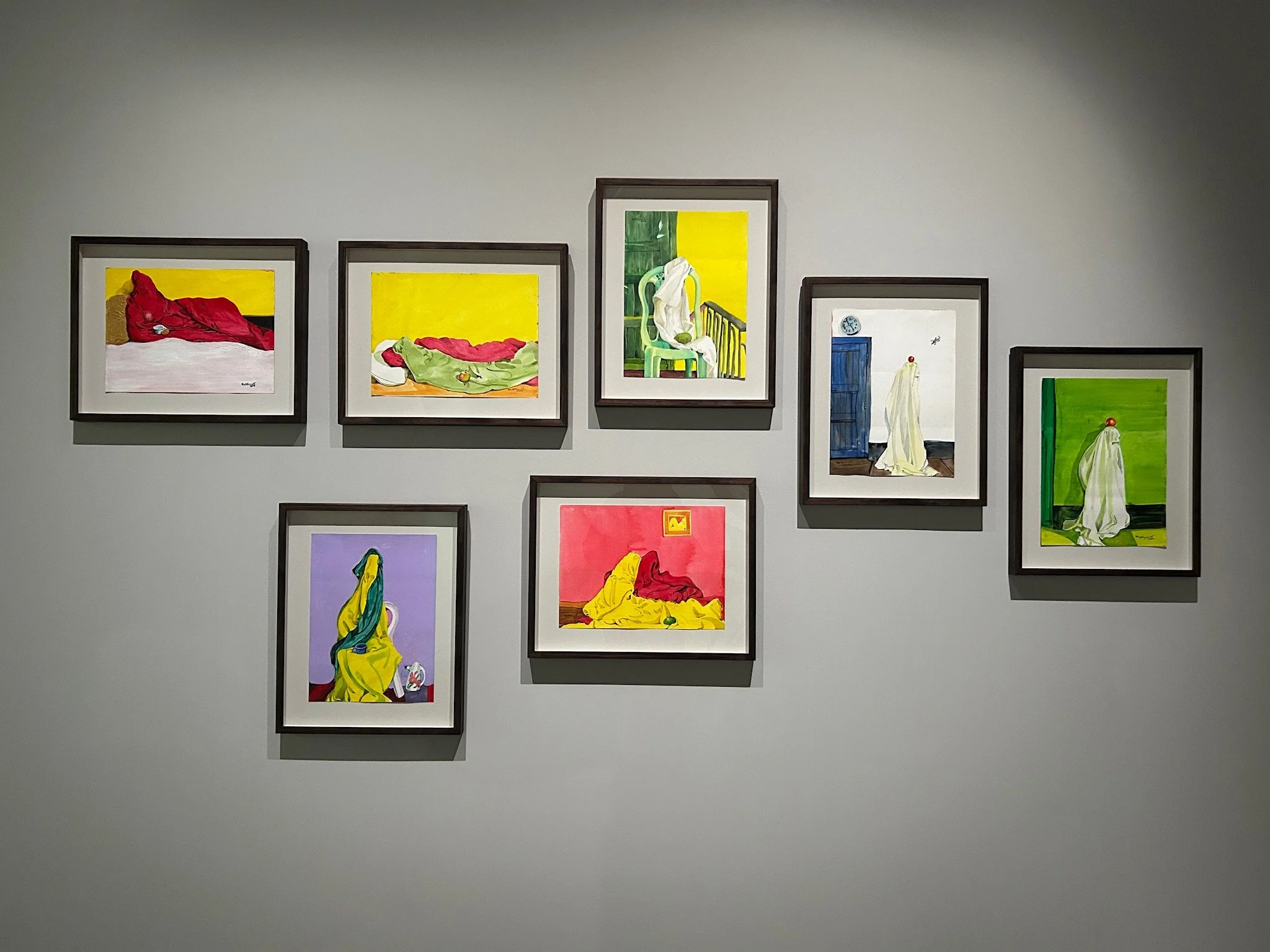

Singapore Art Museum, or SAM, was (I only now realize) one of the ones we’d wanted to visit. It at least had a sign, which put it miles ahead of every other gallery/random door in this giant complex.
Inside, there was a front desk, lockers for our bags, and at the other end, a small coffee shop. There were four galleries spread across two floors. We paid $20 to walk through them.
When I say there was no one there, I mean there was NO ONE there. There were lots of employees, but no actual visitors besides us. Photographs were forbidden in most of the galleries.
We saw some Indonesian art that was kind of neat, and upstairs was an exhibit where they displayed photographs and memorabilia from previous performance art done either at the museum or elsewhere. There is a fine line between doing something as performance art and just doing that thing. They showed video of when someone had set up a barber chair in the museum and people could come in and get haircuts. Is that art, or just a free barber shop? I don’t know.
A woman walked up and asked if we wanted a guided tour. I told her no because Eriko wouldn’t understand her, and I didn’t want to have to awkwardly interact with a tour guide giving a presentation only to me. Some of the performance pieces seemed pretty far out there. There was one about a guy in New York in the ‘70s who locked himself in a cage in his apartment and didn’t speak, read, watch TV, or listen to the radio for an entire year; whatever floats your boat, I guess. Overall, the exhibit was okay, in a “wow, that’s weird” sort of way, a feeling that lots of contemporary art generates within me.
$20 seemed like a lot for such a small place. Also, why put this museum in this location? I guess I could see artists renting studios/galleries in a warehouse area, but this is not the place for a museum, as evidenced by the fact that no one was there. The woman told us that there were other galleries in the building that were free, and that we should walk around and check them out. So we did.
Museum of Contemporary Art
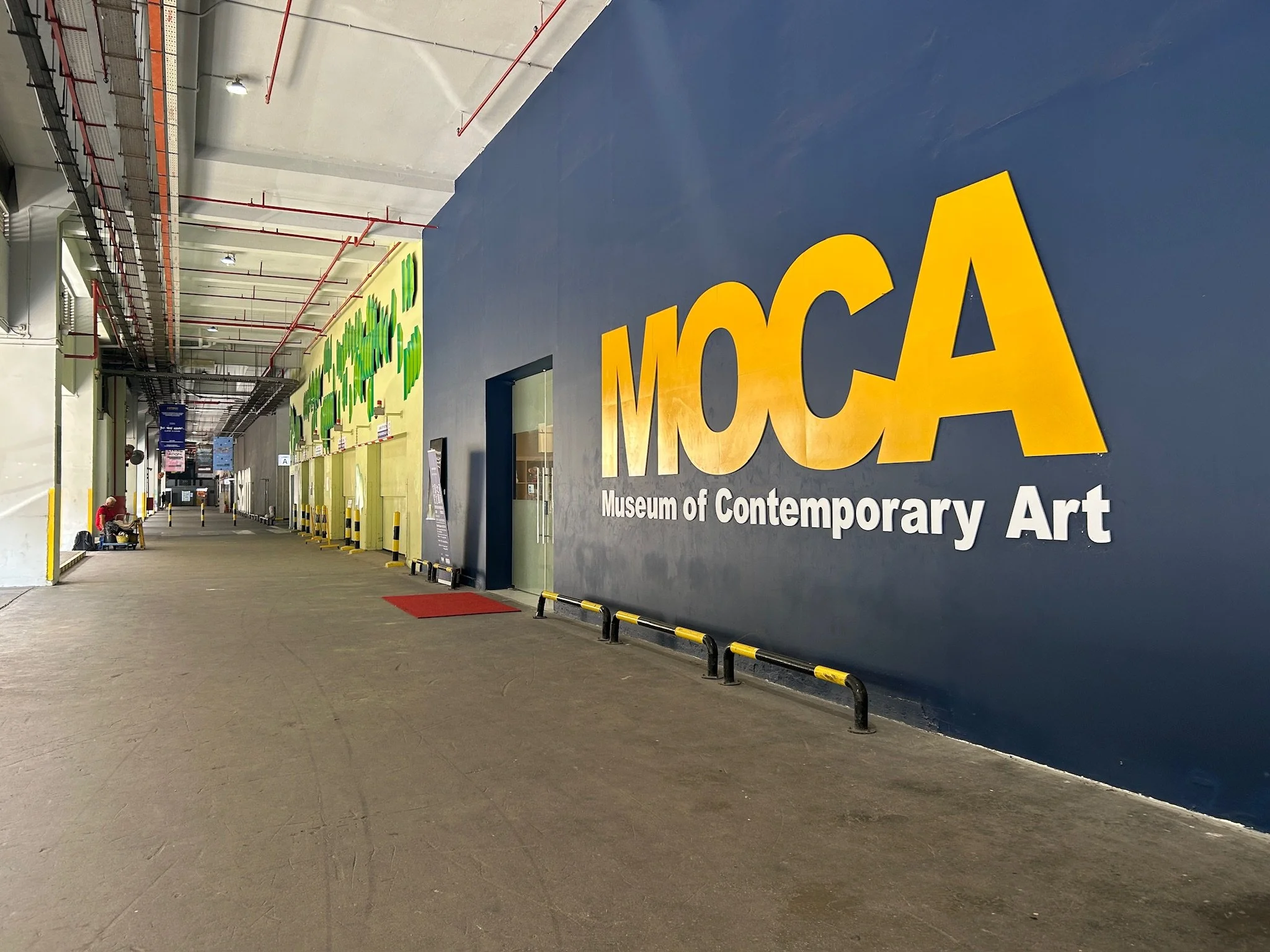

The only other gallery with an actual sign was MOCA, which was also completely empty except for us and two employees at a desk who seemed busy with something. It was full of paintings by only one or two artists that were pretty good, but we were unsure of the rules because we’d just wandered in and the employees had ignored us. It didn’t take long to see everything inside.
This whole complex was completely uninviting and weird, and it was no surprise to me that people weren’t flocking to this place. Who were these museums for? I didn’t know, but there was nobody around, so if their goal was to keep the public from seeing any of their art, they were doing a bang-up job. However, if they actually wanted visitors to look at these paintings and sculptures and whatnot, maybe another location would be more suitable, perhaps one nearer the places where people go.
We had a somewhat similar experience with the malls in the Orchard area. There were a lot of fancy stores, but few customers. Where was everybody? It seemed tourists just go to Gardens by the Bay and Marina Bay Sands, and everyone else in Singapore is there to work. At lunchtime, we saw a lot of people eating by themselves in food courts. Nighttime spots like Satay Street were full, but otherwise, we didn’t see a lot of human interaction in Singapore.
It was a million degrees and we didn’t want to mess around with this place any longer, so we went to Clarke Quay, which was, you guessed it, empty. There was a doggy swimming pool and a cafe inside a music store (sounds like a great idea, but it’s a bit annoying to try to read while three guys are noodling around on guitars they’re not going to buy), but other than that, everything else was closed, waiting for the drunk tourists who’d be swarming it that night. I was melting, but Eriko wanted to walk to the National Gallery, which wasn’t too far away. We went.
Singapore National Gallery
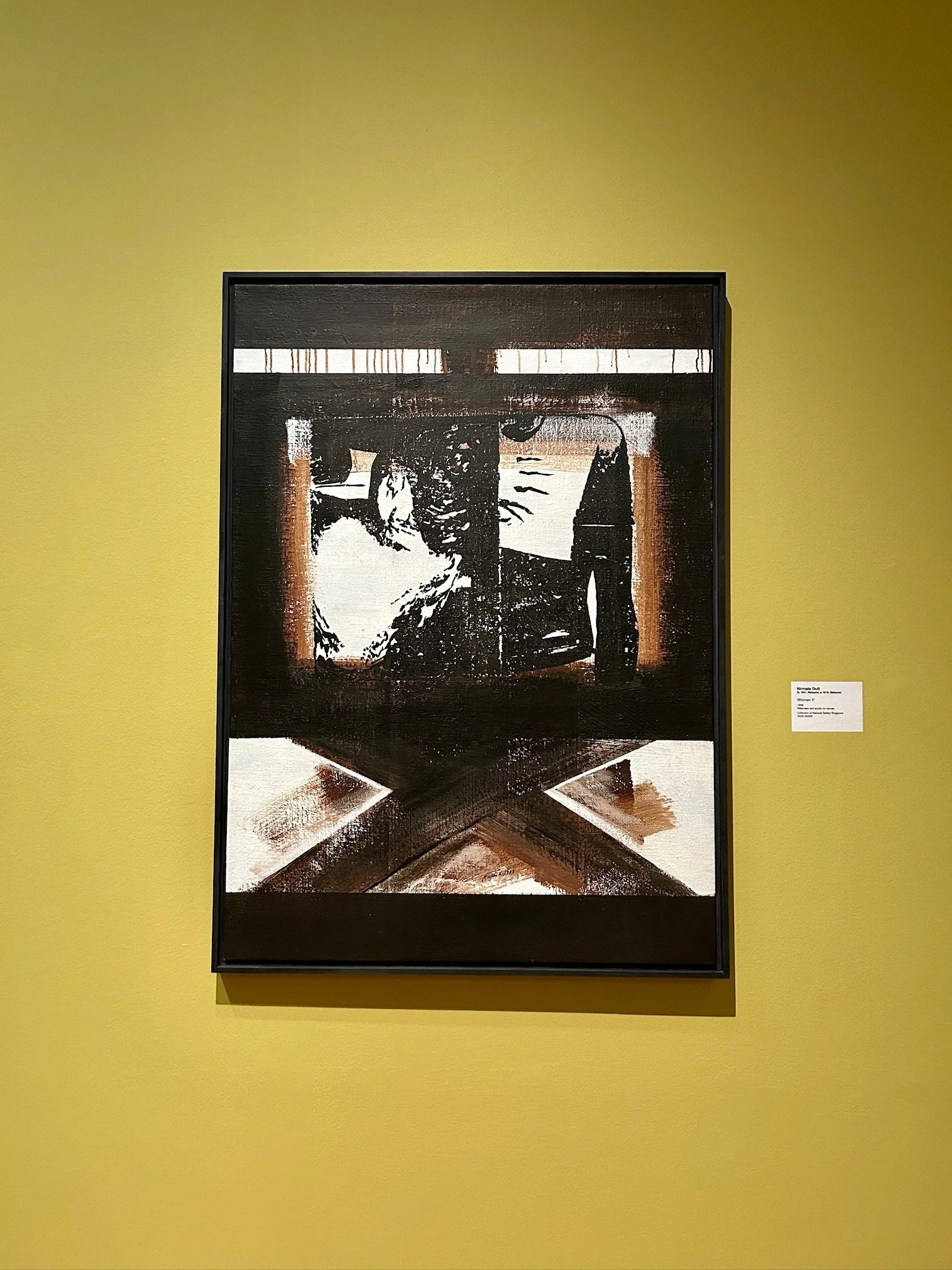
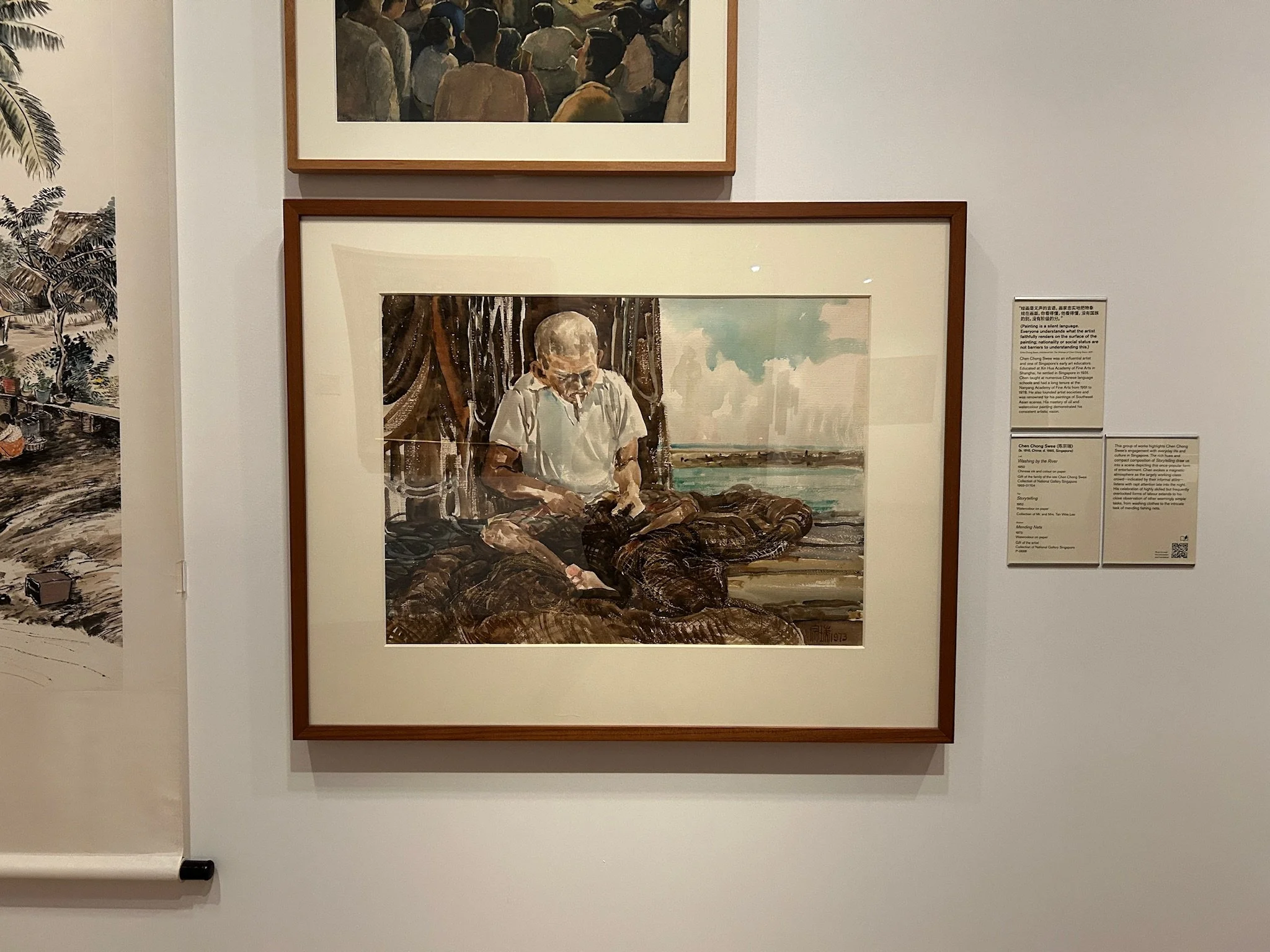
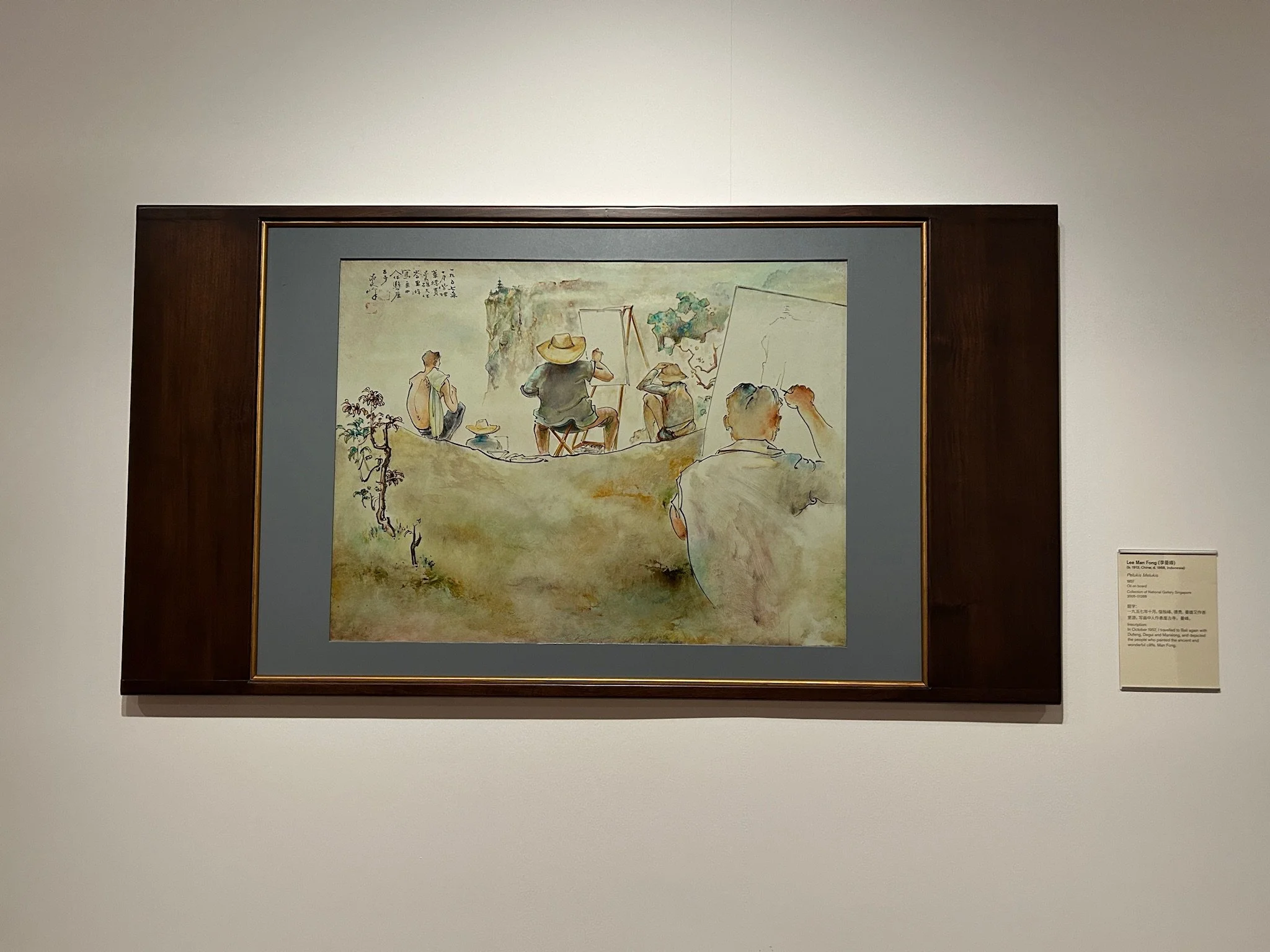

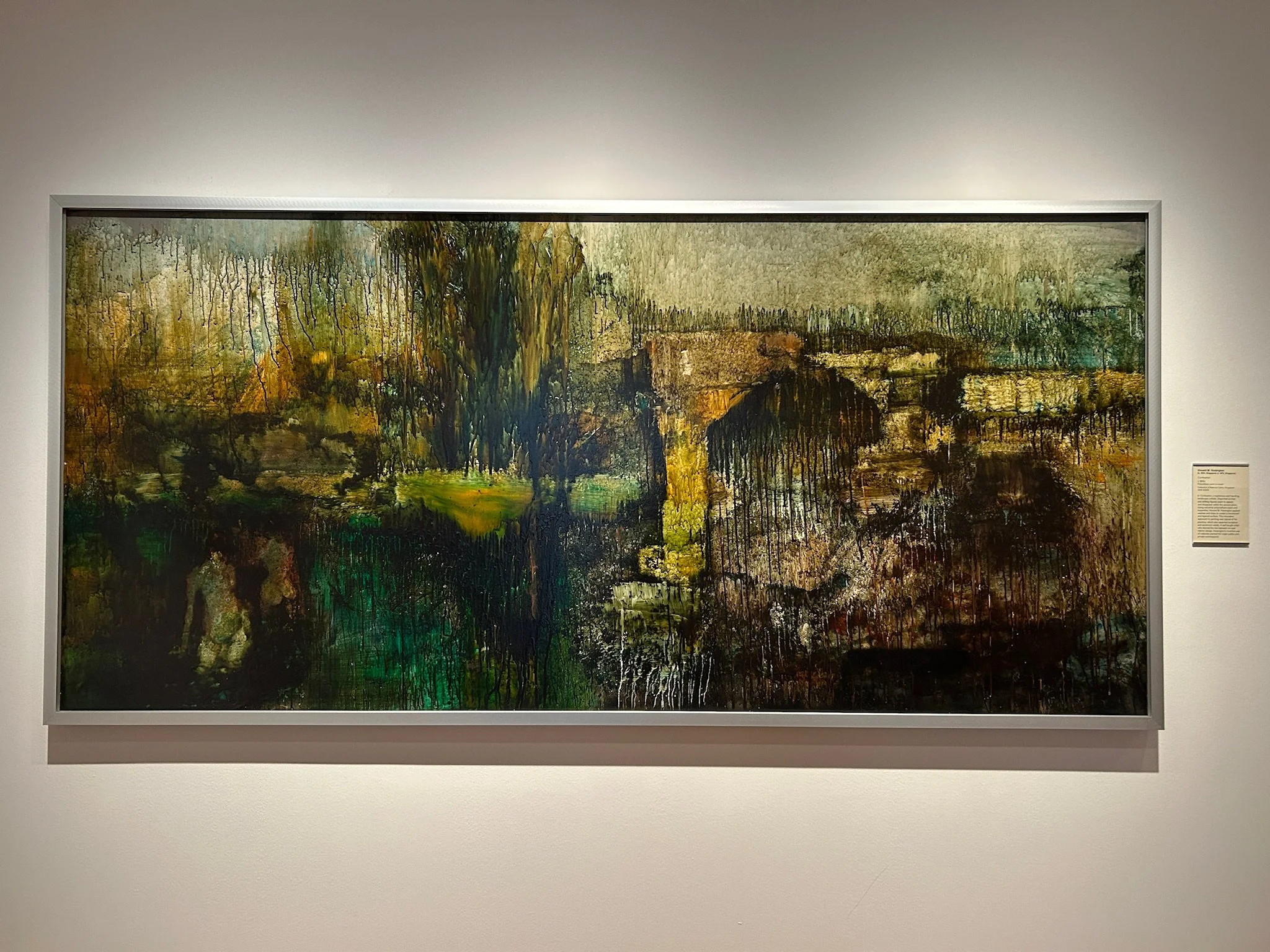
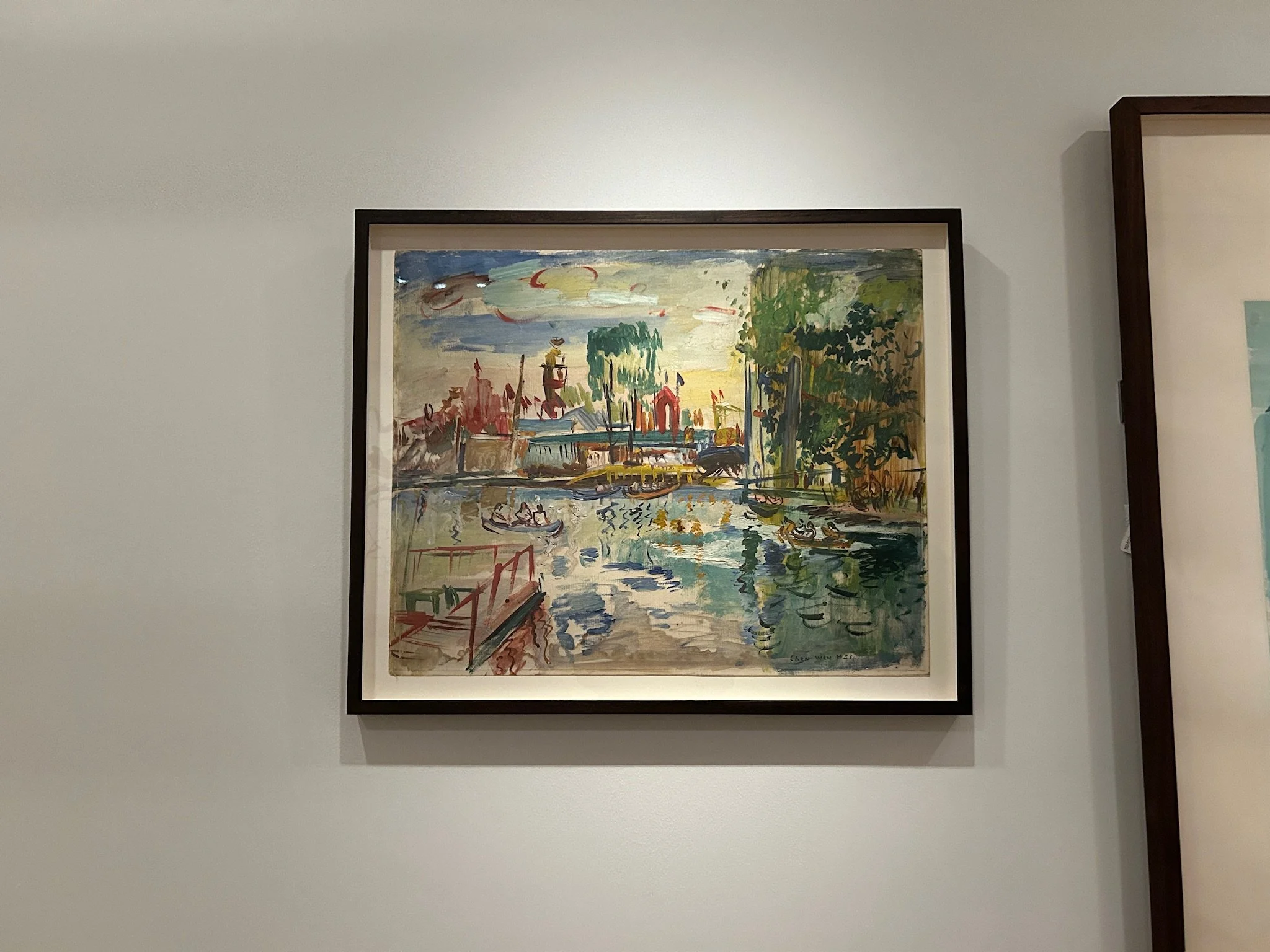
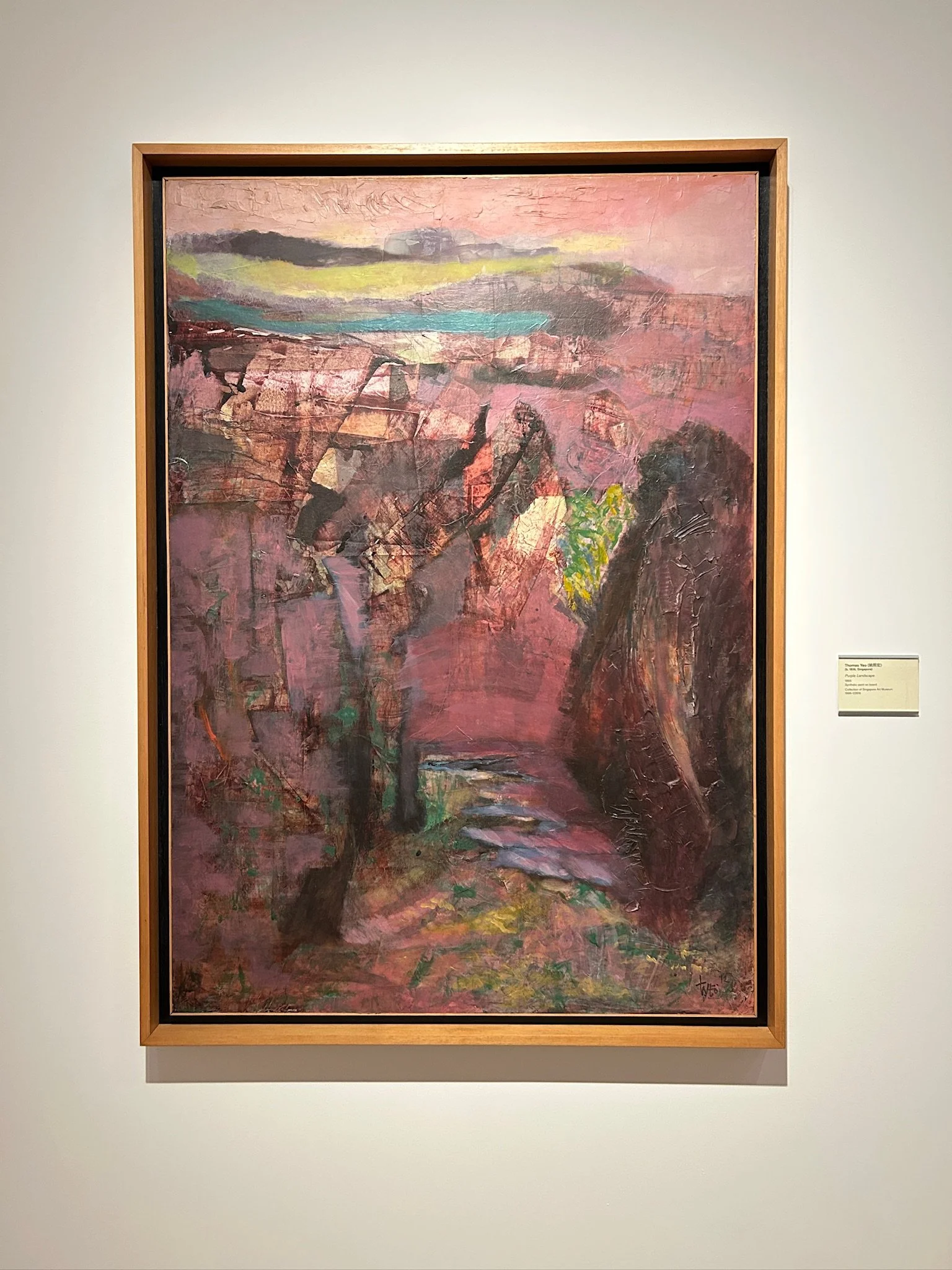
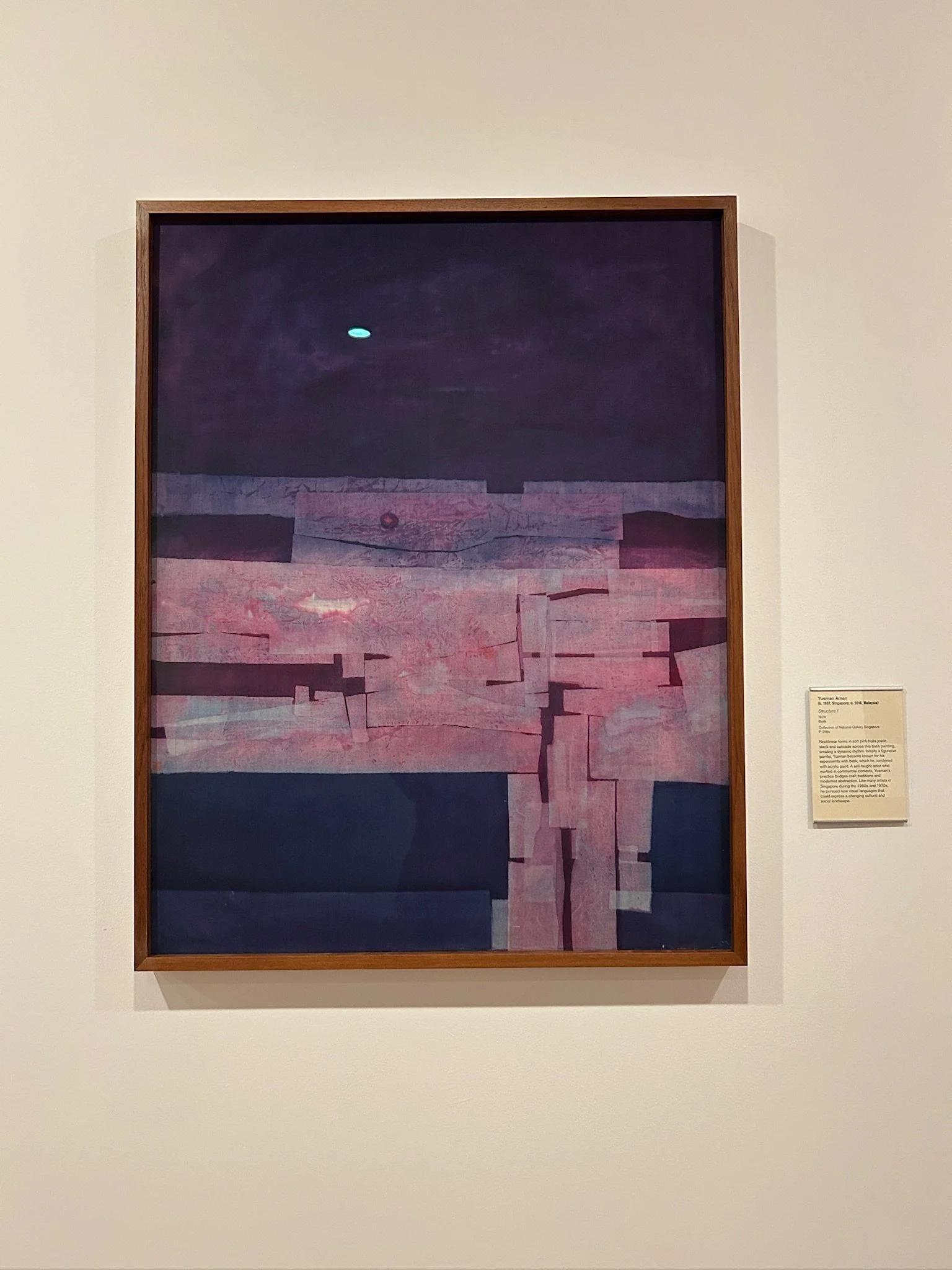

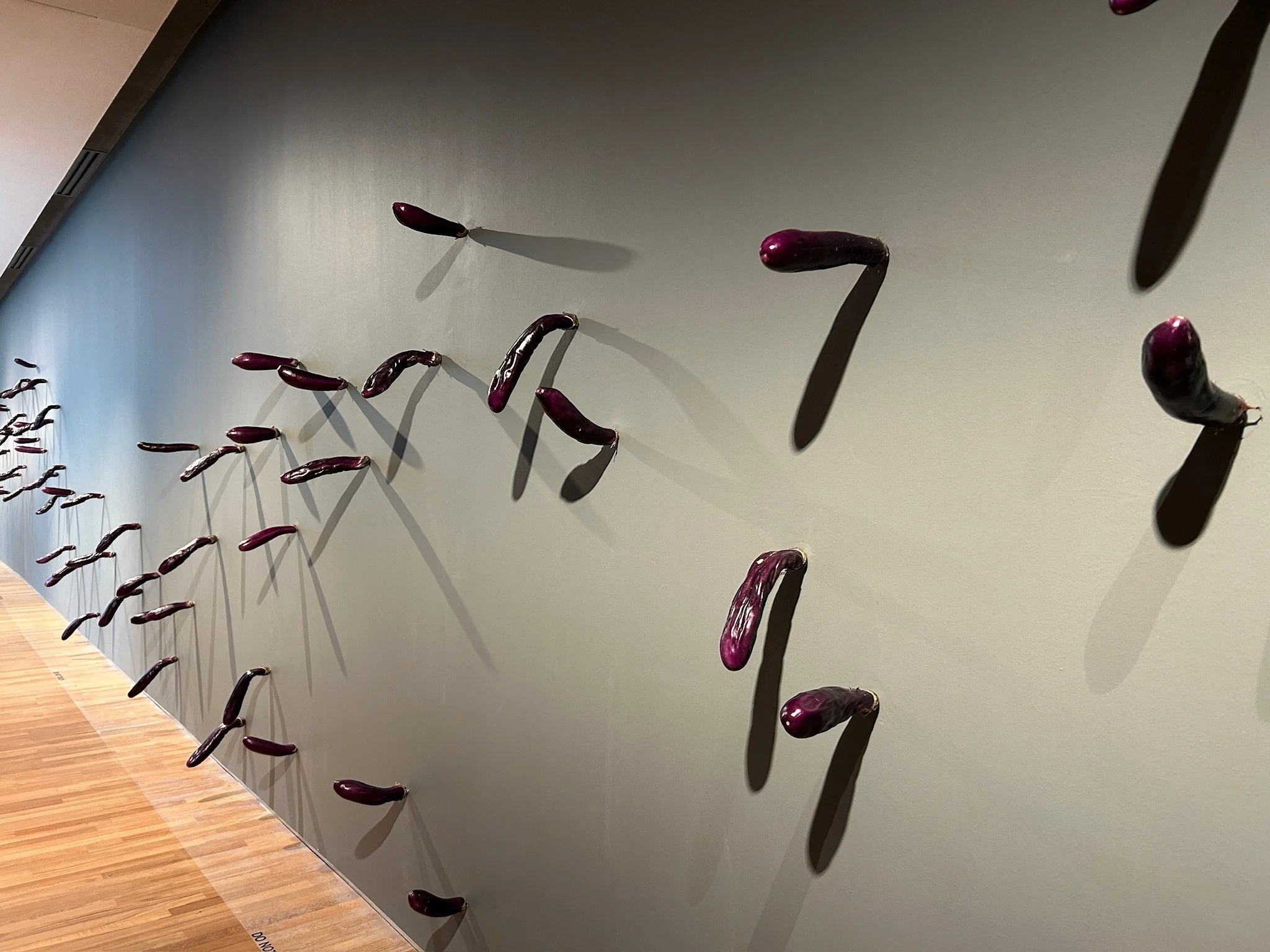
The National Gallery is housed in a big, tall office building divided into two towers. Inside, we were told to buy tickets to the museum at a kiosk. We bought them. We went down to the basement and saw a free gallery where there was a feminist art exhibit that was all right. But we hadn’t need to pay for that, so we went upstairs to find the things we were paying for.
The next floor up was supposedly the lobby, but all we saw was a restaurant and gift shop. We asked a guy where to go, and he said everything from floor 4 on up was closed for a private event. There was nothing on floor 1. So we had floors 2 and 3, and one of those was nothing but a single sculpture that had really been oversold in the brochure.
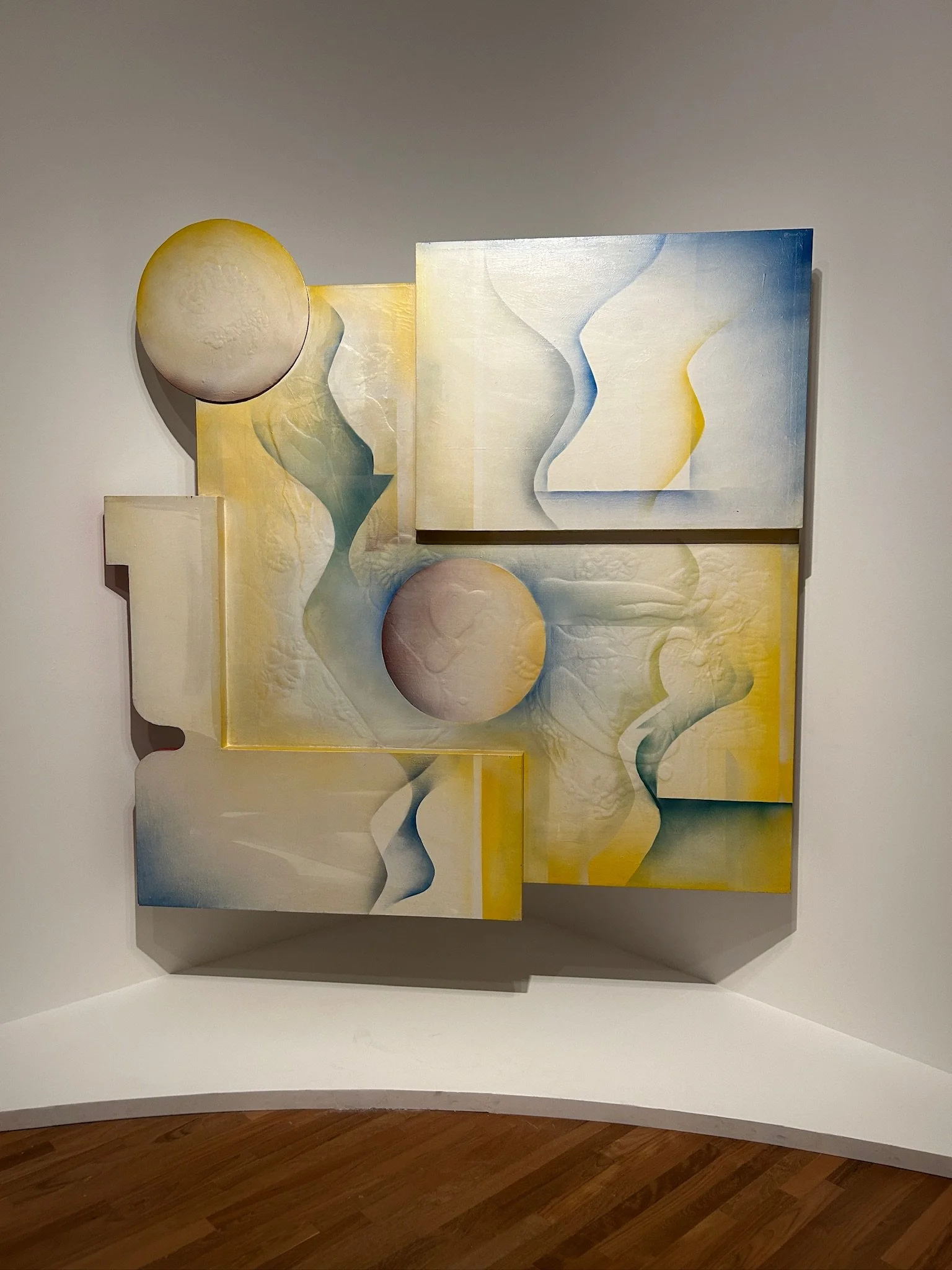
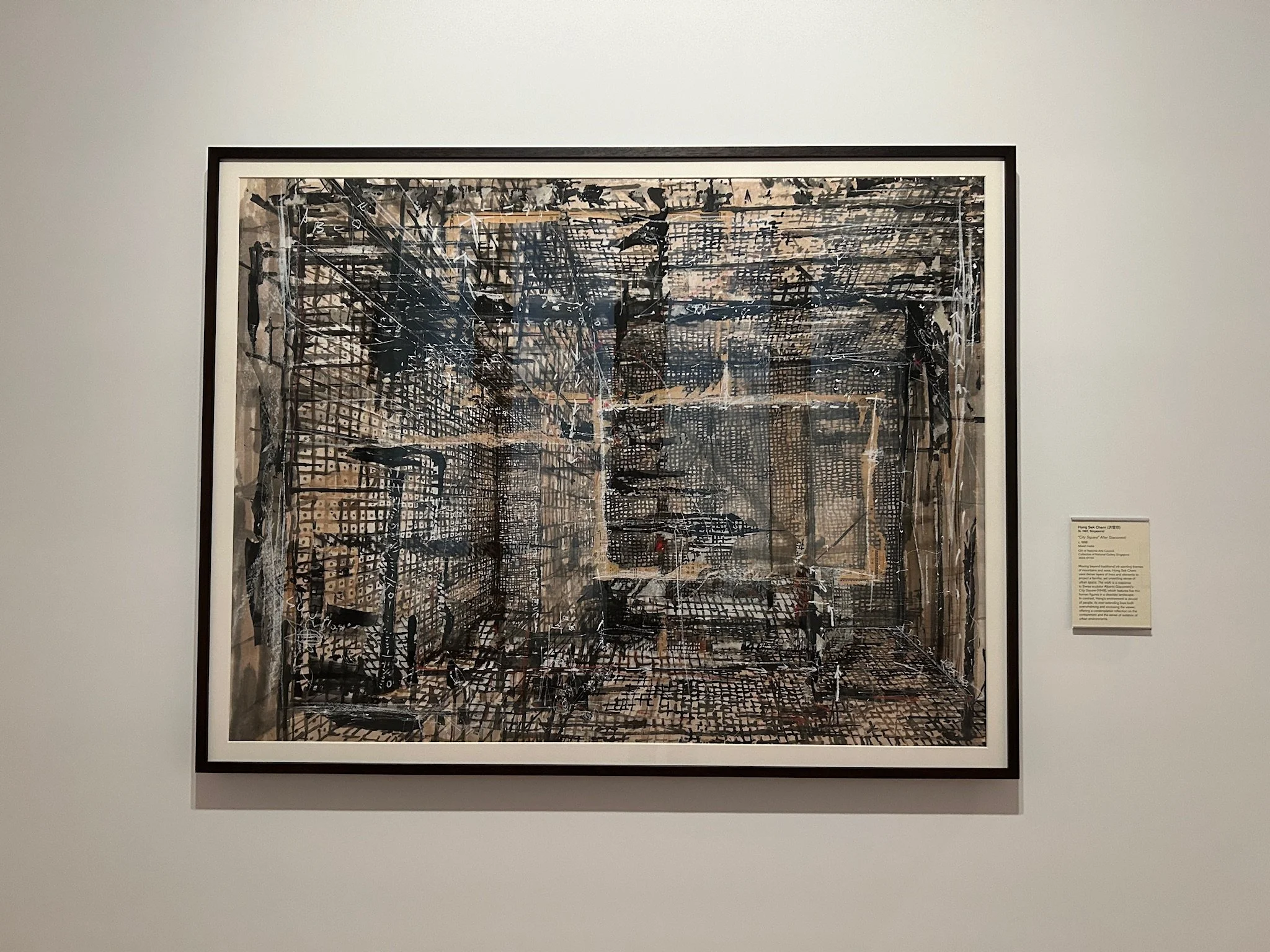
The one floor that actually had art we could see started out kind of meh, a lot of so-so old paintings of old Singapore. But eventually, as the timeline continued and the paintings got newer, they started speaking my language. Lots of abstract stuff that was bang-on what I enjoy. Singapore apparently had a really kicking art scene in the 20th century. Seeing these paintings made up for the annoying confusion we’d gone through at every museum that day.
But if Singapore used to be an artistic paradise, why is it the way it is now? Because even at this, the National Gallery, there was HARDLY ANYONE THERE. We saw people walking around for business, or some event, or dining at the cafe, but no one looking at the art. The guy at the stairwell seemed surprised to see us and was very energetic as he gave us information that completely contradicted what the first guy had told us. This guy also had terrible breath. Not my favorite dude in SG.
Leaving the National Gallery, we were, as we had been most of the day, utterly confused. Singapore has art. The older stuff is buried in this giant building as though it’s an inconvenience to whatever else goes on there, and the new stuff is in a weird warehouse by a port. No one goes to either. What do people do here? Does anyone actually live in Singapore?
Haji Lane: finding culture in Singapore
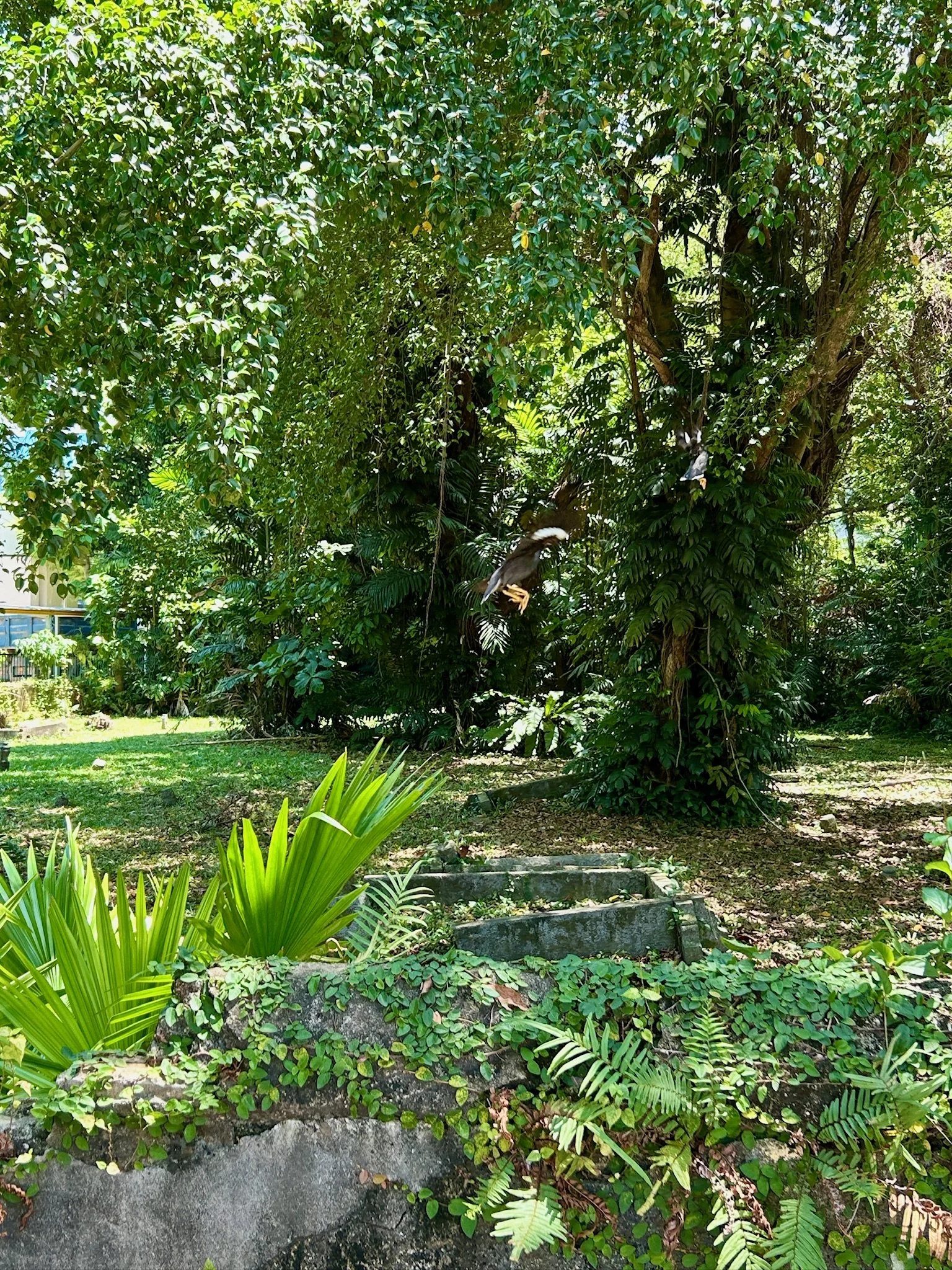


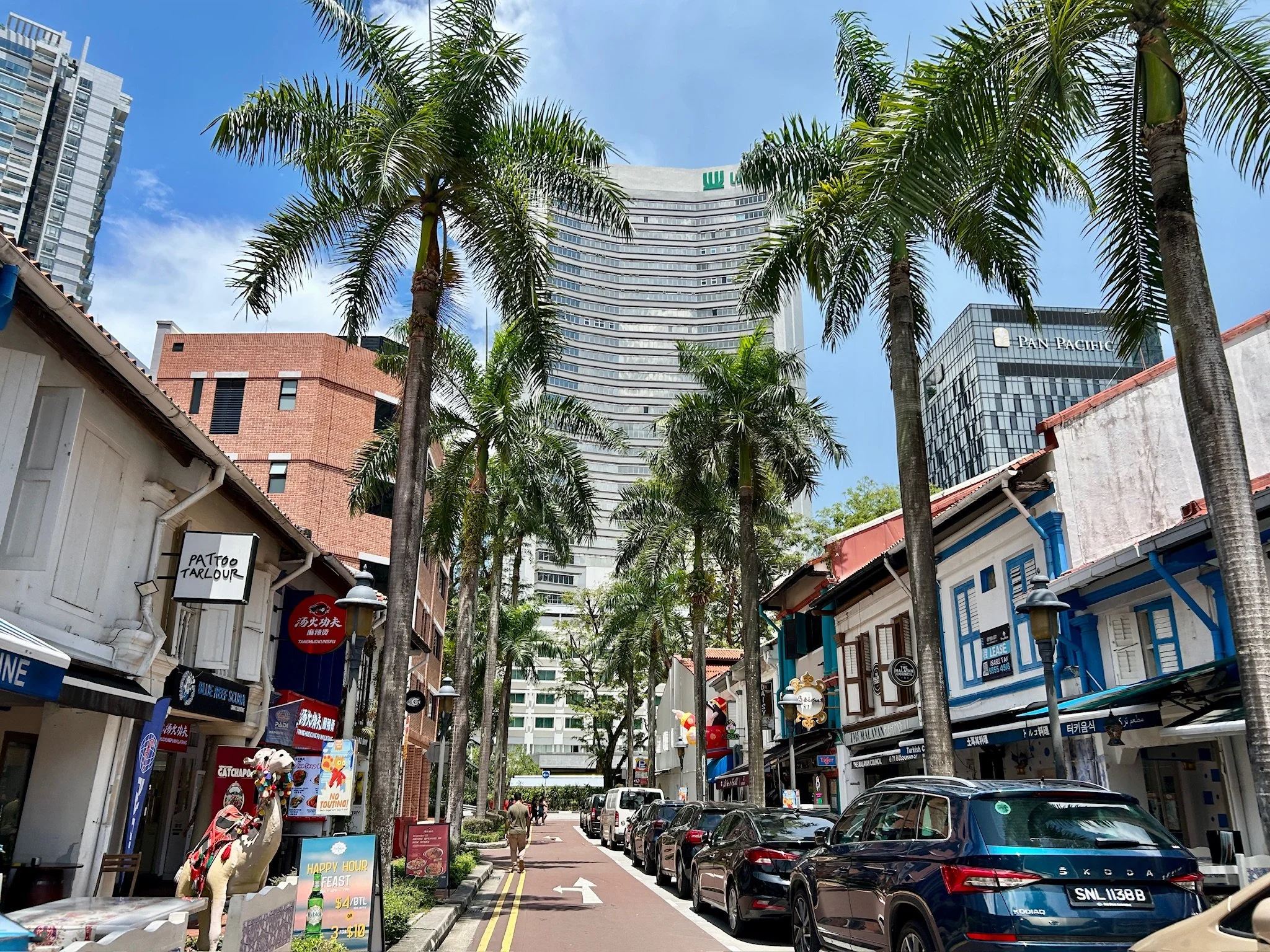

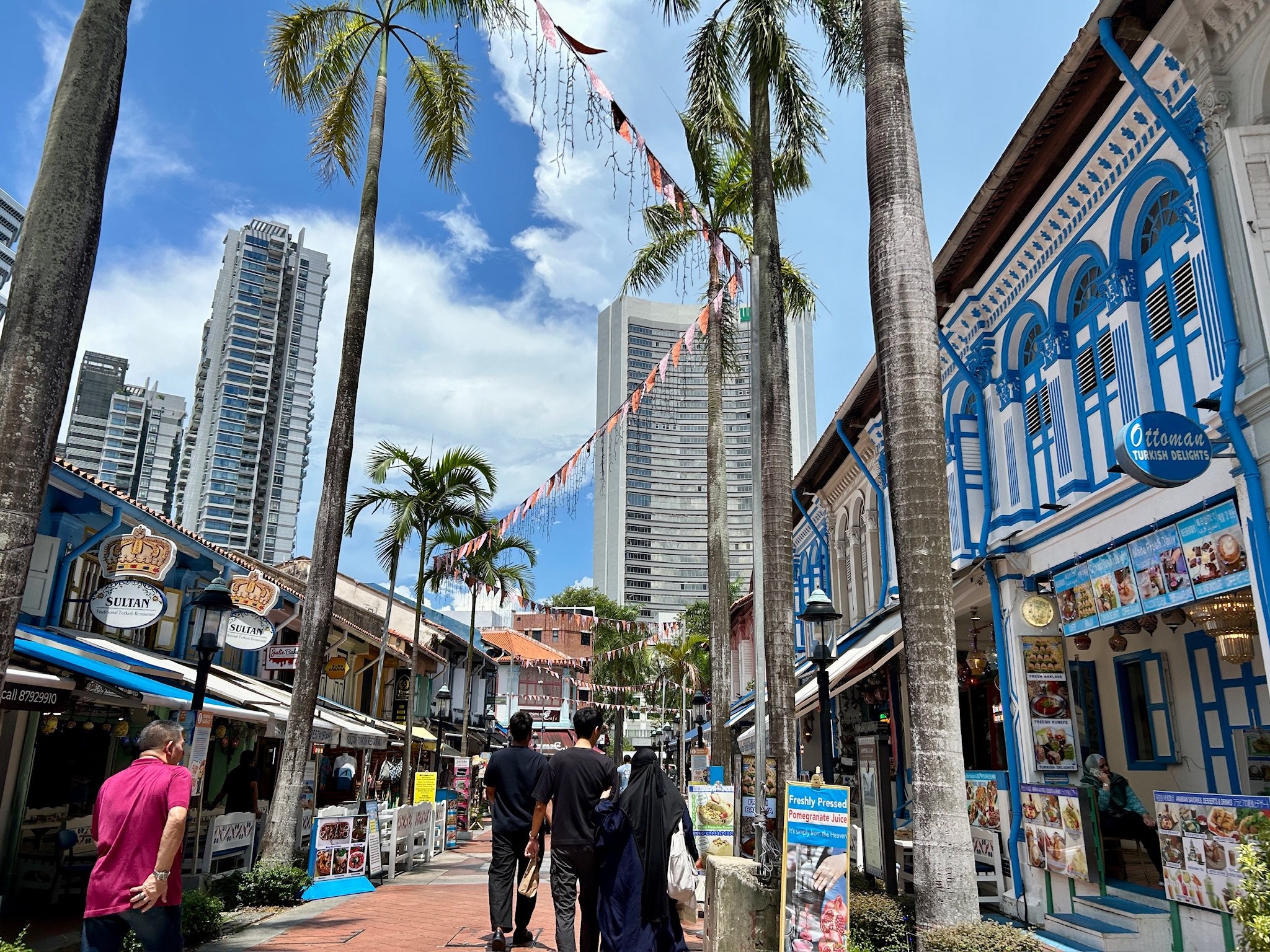
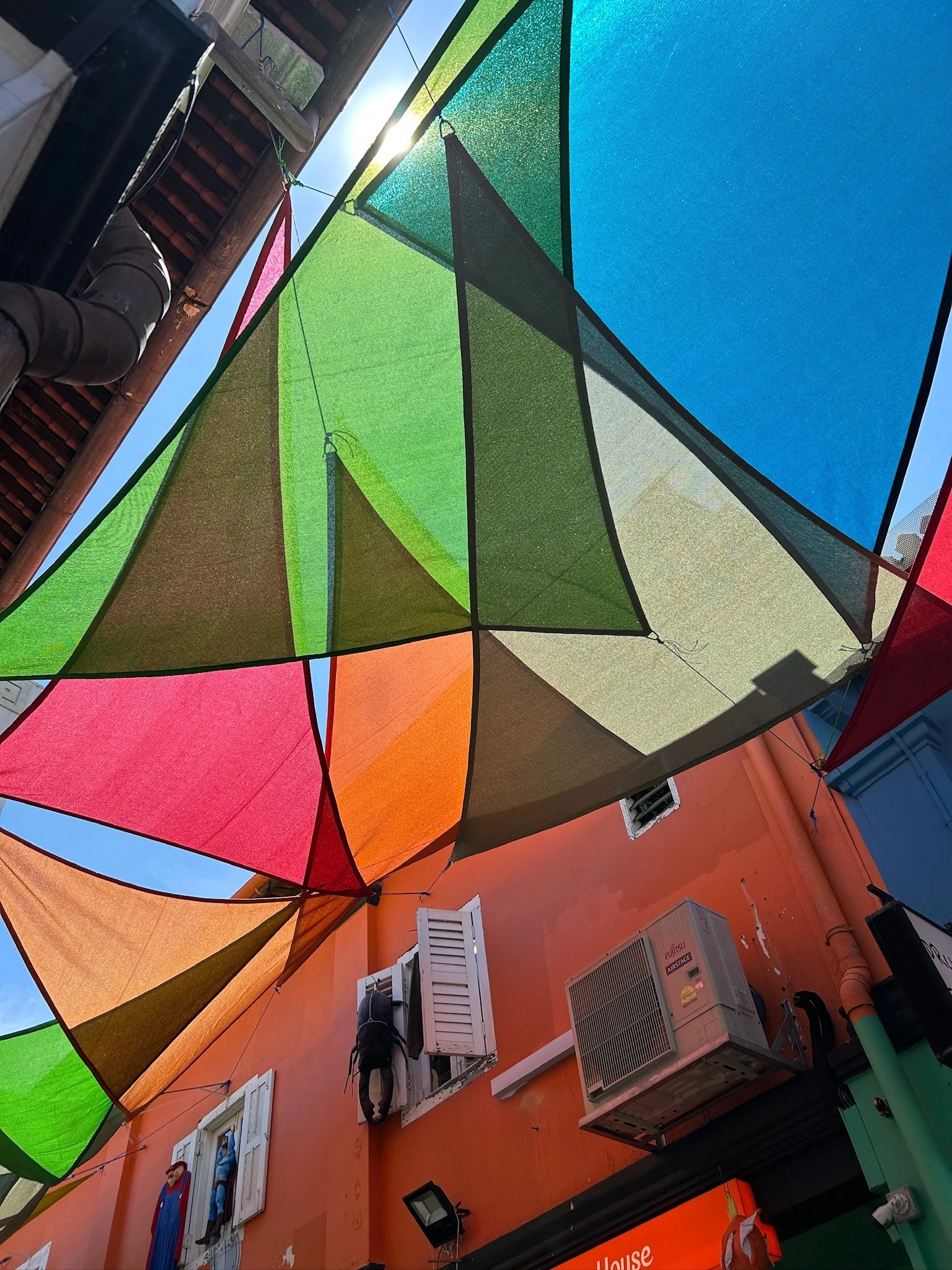
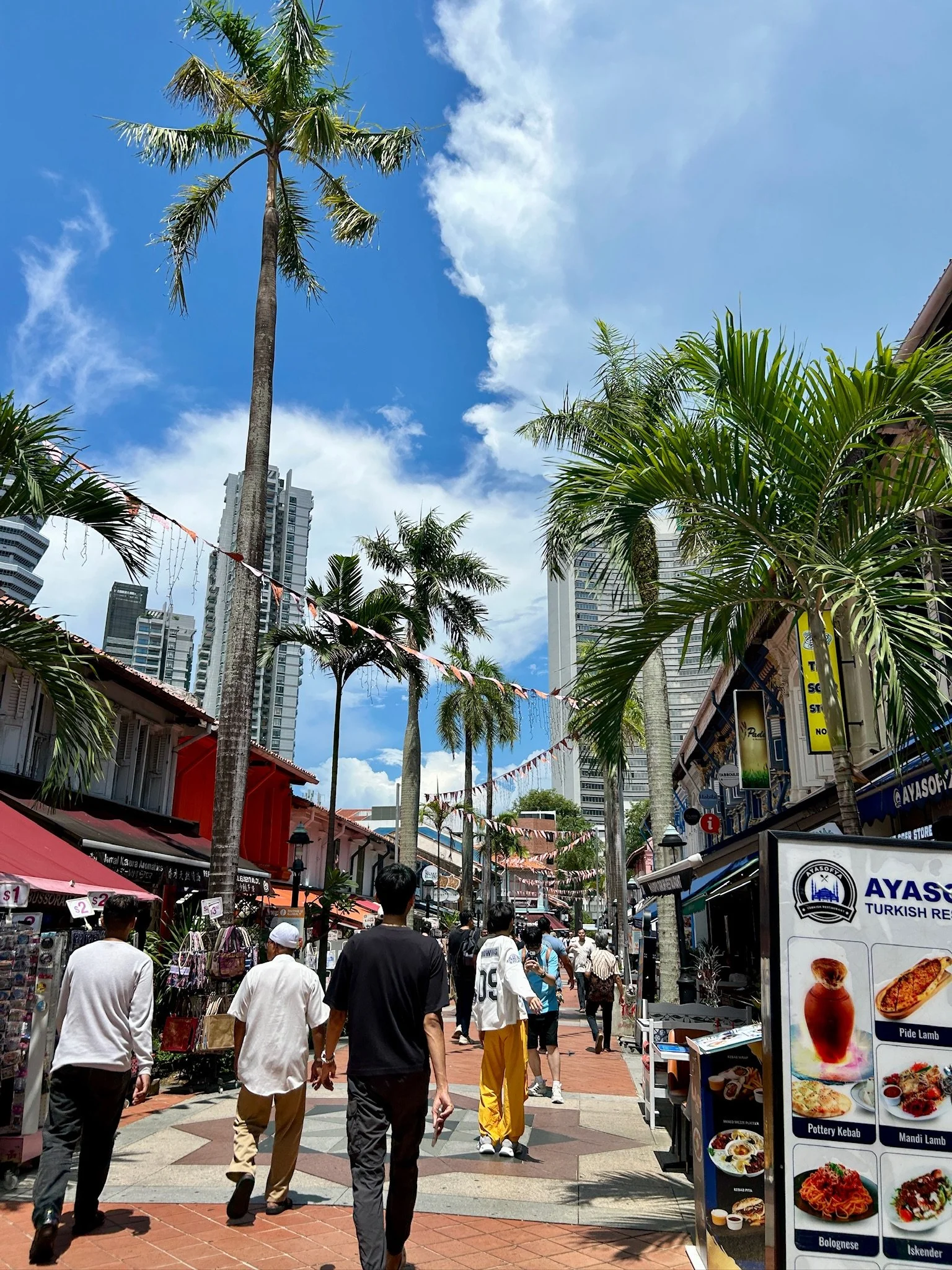
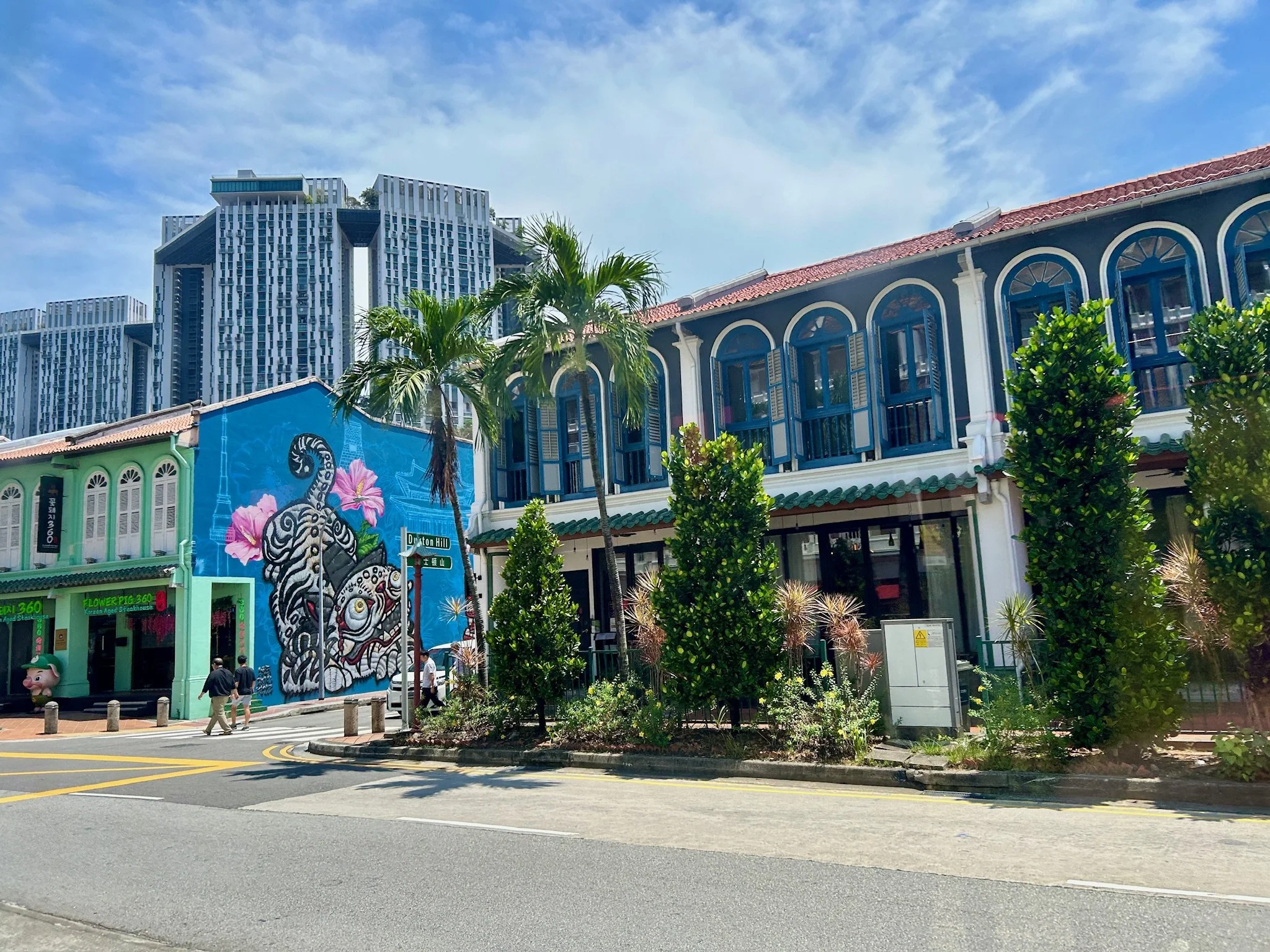
On our final day, we decided to check out Haji Lane, supposedly known for used clothing shops. It was a million degrees out and super humid, so I wasn’t in a mood to try on clothes, but we could at least look for souvenirs and try smoothies or something. When we got there, we were pleasantly surprised.
Actual people! Not employees or white guys in suits-but-no-ties, but actual humans walking around, leaving school, going to shops and restaurants. We’d finally found a neighborhood where people didn’t just work, but seemed to genuinely live. It was a breath of musty air (no air in Singapore can be considered “fresh”). It was too hot to eat at the restaurants or try on clothes in the vintage shops, but we were happy just to experience this colorful neighborhood, the first place we’d been in Singapore that had more to say for it than the cost of its buildings.
Conclusion: we don’t really get Singapore, but would like to






We’ve been to Singapore twice now. The first time, we saw the tourist spots (Gardens by the Bay, Marina Bay Sands, hawker centers, Chinatown). The second time, we tried staying in the Orchard area and focusing on shopping and art, but both were devoid of people. We’ve enjoyed our time in Singapore, but definitely haven’t gotten a handle on this place yet. Its character doesn’t jump out at you in the way cities like Bangkok or Paris do.
It really seems like central/east Singapore is just where people go to work. I think if we go back to this country, we’ll stay in a different area and check out the areas further north and west, and hopefully visit neighborhoods that have more of a personality. Haji Lane was evidence that Singapore does, in fact, have culture beyond its hawker center food, but you won’t find it if you stick to the business & tourist centers.
If you’re visiting Singapore, of course check out the places every tourist visits, but also consider trying some neighborhoods that don’t have big attractions, because that may be where the culture is. Although, if the culture you like is art, you may find that you’re the only one there. That’s okay, though, because the paintings at the National Gallery are cool. And try some kaya toast. It’s good.